

Discover the Hadzabe Tribe with Native Son Expeditions. Explore authentic culture in Tanzania. Book your unforgettable safari today!
Hadzabe Tribe: Authentic Cultural Experience with Native Son Expeditions
If you are searching for a truly authentic African cultural experience, the Hadzabe Tribe offers something rare in today’s modern world — a chance to meet one of the last remaining hunter-gatherer communities on Earth.
At Native Son Expeditions, we understand that modern travelers are no longer looking for staged performances or surface-level encounters. You want real connection. You want to learn. You want to experience culture respectfully and responsibly. Most importantly, you want to know:
Is visiting the Hadzabe Tribe ethical? Is it safe? What will I actually experience? And is it worth it?
This guide answers those questions directly.
The Hadzabe Tribe lives near Lake Eyasi in northern Tanzania, close to major safari destinations like Serengeti National Park and Ngorongoro Conservation Area. Yet their way of life is dramatically different from the safari lodges and wildlife drives most visitors know.
They still practice traditional hunting with bows and arrows. They gather wild fruits and honey. They live in small, mobile camps. And they maintain a language rich in distinctive click sounds, unrelated to most other African languages.
With Native Son Expeditions, your visit is:
-
Community-led
-
Ethically structured
-
Educational
-
Respectful
-
Small-group focused
-
Guided by local cultural experts
This article will explain who the Hadzabe are, what you’ll experience during a visit, how to travel responsibly, and why this journey is more than just tourism — it’s cultural preservation in action.
Understanding the Hadzabe Tribe: History, Culture, and Daily Life
Who Are the Hadzabe?
The Hadzabe Tribe is one of the last remaining hunter-gatherer communities in Africa. Anthropologists estimate they have lived around Lake Eyasi for tens of thousands of years, maintaining a lifestyle remarkably similar to early human societies.
According to information documented by organizations such as National Geographic, the Hadzabe are among the few groups globally who continue to rely primarily on wild foods rather than agriculture or livestock.
Key facts about the Hadzabe Tribe:
-
Population: Approximately 1,000–1,500 individuals
-
Location: Around Lake Eyasi, northern Tanzania
-
Economy: Hunting and gathering
-
Social structure: Egalitarian, no formal chiefs
-
Language: Hadzane (a click language)
Unlike many tribes that have transitioned into farming or pastoralism, the Hadzabe still depend on:
-
Wild game (small antelope, birds, baboons)
-
Honey collected from baobab trees
-
Tubers dug by women
-
Seasonal berries and fruits
Their deep ecological knowledge of the land is extraordinary. They know animal tracks, plant medicines, seasonal patterns, and water sources in ways that modern society rarely understands.
What Makes the Hadzabe Experience Unique?
Many cultural visits in Africa are short performances. The Hadzabe experience is different.
With Native Son Expeditions, you don’t watch from a distance — you participate respectfully.
You may:
-
Join early morning hunting walks
-
Learn how to make fire using traditional methods
-
Practice archery with handcrafted bows
-
Understand how honey is harvested
-
Learn about traditional medicine plants
This is not staged. It is daily life.
However, participation is always guided carefully to avoid intrusion or disruption. Ethical travel matters deeply to us.
Why Visit the Hadzabe Tribe with Native Son Expeditions?
1. Ethical and Responsible Tourism
Cultural tourism must protect dignity.
Native Son Expeditions works directly with local representatives around Lake Eyasi to ensure:
-
Fair community compensation
-
Informed consent
-
No forced performances
-
Respect for privacy
-
Small visitor numbers
We believe cultural experiences should empower communities, not exploit them.
2. Expert Cultural Interpretation
Our guides are trained in:
-
Tanzanian anthropology
-
Local tribal histories
-
Conservation ethics
-
Cross-cultural communication
This ensures you understand context, not just activities.
When you visit the Hadzabe Tribe, you learn about:
-
Land rights challenges
-
Modern pressures from farming expansion
-
Climate change impacts
-
Government policies affecting indigenous groups
This educational layer transforms your visit from tourism into awareness.
3. Seamless Safari Integration
The Hadzabe cultural tour pairs perfectly with:
-
Serengeti wildlife safari
-
Ngorongoro crater game drive
-
Tarangire National Park exploration
Native Son Expeditions designs itineraries that combine wildlife and culture without rushing either experience.
What to Expect During Your Hadzabe Tribe Visit
Early Morning Hunting Experience
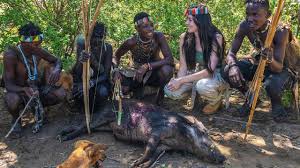
Members of the Hadzabe Tribe after a successful early morning hunt near Lake Eyasi, demonstrating their traditional bow-and-arrow hunting skills preserved for generations.
The day typically begins at sunrise.
You walk with Hadzabe men into the bush. Silence is essential. Tracking skills are demonstrated in real time.
You observe:
-
Animal footprints
-
Bird signals
-
Tree markings
-
Hunting techniques
Participation is voluntary and observational.
Traditional Fire Making
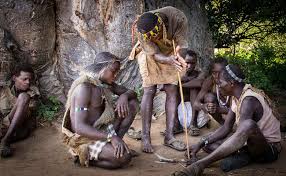
A member of the Hadzabe Tribe demonstrating traditional fire making techniques using natural materials near Lake Eyasi during a cultural tour with Native Son Expeditions.
Fire is created without matches.
Using dry sticks and friction, you witness how survival skills are preserved through generations.
This moment often becomes the most powerful memory for travelers.
Women’s Gathering Activities
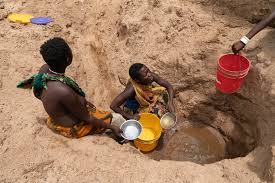
Hadzabe Tribe women collecting water near Lake Eyasi as part of their daily gathering activities within their traditional hunter-gatherer lifestyle.
Hadzabe women collect:
-
Tubers
-
Berries
-
Edible roots
They demonstrate digging techniques and explain seasonal food cycles.
This gives insight into gender roles, which are cooperative and balanced rather than hierarchical.
Language and Communication
The Hadzabe language contains distinctive click sounds. It is unrelated to Swahili and differs from neighboring tribes like the Datoga.
Understanding their language helps visitors appreciate:
-
Oral storytelling traditions
-
Humor and social bonding
-
Cultural identity preservation
Best Time to Visit the Hadzabe Tribe
The Hadzabe can be visited year-round, but the dry season (June–October) offers:
-
Easier road access
-
Clearer tracking during hunts
-
Comfortable walking conditions
However, the wet season provides lush landscapes and abundant wild fruits.
Native Son Expeditions advises based on your overall Tanzania itinerary.
Cultural Sensitivity Guidelines
When visiting the Hadzabe Tribe, follow these principles:
-
Ask before taking photographs
-
Dress modestly
-
Avoid giving gifts directly
-
Listen more than you speak
-
Respect boundaries
Cultural preservation requires mutual respect.
Conservation and Indigenous Rights
The Hadzabe face increasing pressure from:
-
Agricultural expansion
-
Livestock grazing
-
Land disputes
Organizations such as Survival International advocate for indigenous land protection globally.
Responsible tourism, when managed correctly, can support:
-
Legal land recognition
-
Cultural education
-
Community income
-
Youth empowerment
Native Son Expeditions aligns with sustainable tourism frameworks to protect the future of the Hadzabe people.
Combining Hadzabe Experience with Other Cultural Encounters
Near Lake Eyasi, you may also meet:
-
Datoga blacksmith communities
-
Iraqw farming communities
This adds depth to your cultural journey and provides comparative understanding of Tanzania’s ethnic diversity.
Why the Hadzabe Tribe Matters in Today’s World
The Hadzabe represent:
-
Human resilience
-
Sustainable living knowledge
-
Ecological wisdom
-
Cultural continuity
In an era of rapid globalization, their existence reminds us that human society can function without overconsumption.
Visiting them is not about observing the “past.” It’s about understanding alternative ways of living in the present.
Frequently Asked Questions (FAQ)
Is visiting the Hadzabe Tribe ethical?
Yes, when done through responsible operators like Native Son Expeditions. Visits are community-approved, compensated fairly, and structured to avoid exploitation.
Is it safe to visit the Hadzabe Tribe?
Yes. The Lake Eyasi region is generally safe, and tours are guided professionally. Safety protocols are always followed.
How long does the visit take?
Typically 4–6 hours, often integrated into a 1–2 day Lake Eyasi stay.
Do the Hadzabe still hunt traditionally?
Yes. Hunting with bows and arrows remains part of daily life, especially during dry seasons.
Can I take photos?
Yes, but always ask permission first. Respect and consent are essential.
What should I wear?
-
Neutral colors
-
Comfortable walking shoes
-
Sun protection
-
Modest clothing
Will I disrupt their way of life?
When managed responsibly with small groups, visits do not disrupt daily life. Tourism revenue can support land rights and healthcare access.
Is this suitable for children?
Yes, especially for educational family travel, but children should be respectful and supervised.
Final Thoughts: A Journey Beyond Tourism
Visiting the Hadzabe Tribe is not a typical excursion. It is a profound human experience.
You will not find luxury lodges or staged performances. Instead, you will find:
-
Raw authenticity
-
Deep ecological wisdom
-
Cultural resilience
-
Human connection
At Native Son Expeditions, we believe the Hadzabe experience should leave you transformed — not just entertained.
If you are planning a Tanzania safari and want something truly meaningful, this cultural journey near Lake Eyasi offers perspective that wildlife alone cannot provide.
Travel responsibly. Travel ethically. Travel with purpose.
Book your Hadzabe Tribe cultural tour with Native Son Expeditions today and experience one of the world’s last true hunter-gatherer societies — respectfully and authentically.
