
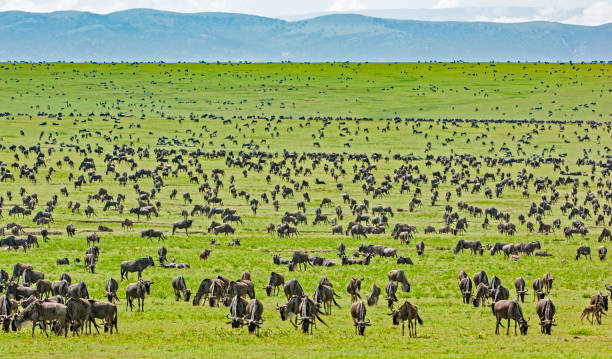
Discover the best Ngorongoro migration insights with Nativesons Expeditions. Learn wildlife movement patterns, seasonal migrations, safari tips, and Tanzania travel strategies for unforgettable safari experiences.
Understanding Ngorongoro Migration Patterns
The Best Ngorongoro migration insights are essential for travelers who want to understand how wildlife movement influences safari experiences in northern Tanzania. While the Ngorongoro Crater is not a classic migration corridor like the Serengeti, it plays a critical role in seasonal wildlife distribution within the broader ecosystem.
Located within the famous Ngorongoro Conservation Area, Ngorongoro is a unique volcanic caldera where wildlife remains present throughout the year. However, surrounding ecosystems—including the Serengeti plains—directly influence movement patterns of wildebeest, zebras, and predators.
With Nativesons Expeditions, travelers gain expert interpretation of these movements, helping them understand when and where to experience peak wildlife activity. This blog provides deep, SEO-optimized travel insights into the Best Ngorongoro migration insights, combining ecology, safari planning, and seasonal behavior.
What Makes Ngorongoro Migration Unique
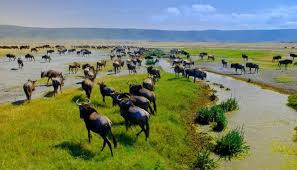
Unlike traditional migration systems, Ngorongoro does not host a full circular migration cycle within the crater itself. Instead, it acts as a permanent wildlife sanctuary that interacts with nearby ecosystems such as the Serengeti.
The Best Ngorongoro migration insights are based on:
- Seasonal movement of herbivores in surrounding plains
- Predator tracking behavior linked to migration routes
- Rainfall patterns affecting grazing zones
- Water availability in the crater and surrounding highlands
This makes Ngorongoro a central observation point for understanding East African wildlife movement.
Relationship Between Ngorongoro and Serengeti Migration
One of the most important Best Ngorongoro migration insights is understanding the connection between Ngorongoro and the Great Migration in the Serengeti ecosystem.
The Serengeti National Park hosts the world-famous wildebeest migration, where over 1.5 million wildebeests move in search of fresh grazing land. These movements indirectly affect Ngorongoro’s predator and herbivore distribution.
Key connections include:
- Wildebeests move between Serengeti and southern plains
- Predators follow migration routes
- Seasonal rainfall determines movement timing
- Ngorongoro acts as a wildlife refuge zone
This ecosystem connection makes migration insights highly valuable for safari planning.
Why Migration Insights Matter for Safari Planning
Understanding the Best Ngorongoro migration insights helps travelers:
- Choose the right safari season
- Predict wildlife movement patterns
- Maximize chances of predator sightings
- Combine Ngorongoro with Serengeti safaris
- Improve photography opportunities
With Nativesons Expeditions, travelers receive expert guidance on aligning their safari with migration timing for better results.
Role of Nativesons Expeditions in Migration Tracking
Professional safari operators like Nativesons Expeditions play a key role in interpreting migration patterns.
Their expertise includes:
- Real-time wildlife tracking
- Seasonal migration forecasting
- Route optimization for game drives
- Knowledge of predator-prey behavior
- Customized safari itinerary planning
This ensures travelers experience the most accurate Best Ngorongoro migration insights during their safari.
Quick Overview of Migration Influence
Even though Ngorongoro is not a full migration corridor, its wildlife is deeply influenced by surrounding movement patterns:
- Herbivores shift between grazing zones
- Predators adjust hunting territories
- Seasonal water sources impact distribution
- Ecosystem balance remains stable year-round
This stability makes Ngorongoro one of the most reliable safari destinations in Africa.
External Authority Reference
For scientific context on African migration systems, travelers can refer to UNESCO which recognizes both Ngorongoro and Serengeti ecosystems as interconnected World Heritage sites.
The Best Ngorongoro migration insights show that Ngorongoro is not a standalone migration hub but a key ecosystem connected to wider East African wildlife movement systems. Its stability, biodiversity, and proximity to Serengeti make it essential for understanding regional migration dynamics.
With expert guidance from Nativesons Expeditions, travelers can interpret these patterns for a more meaningful safari experience.
How Seasons Shape Migration Behavior in Ngorongoro Ecosystem
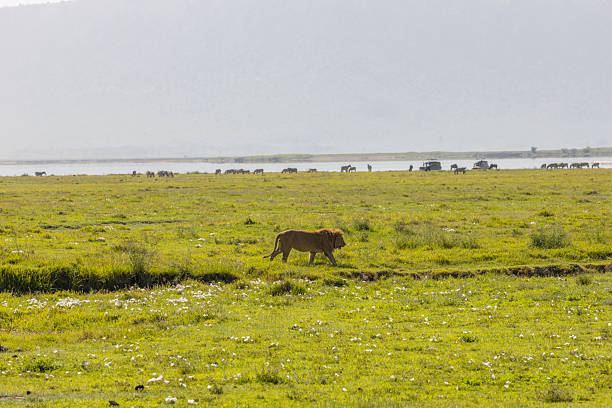
To understand the Best Ngorongoro migration insights, travelers must go beyond general safari expectations and study how seasonal changes influence wildlife movement across northern Tanzania. Although the Ngorongoro Crater itself is a stable ecosystem, its wildlife dynamics are strongly influenced by the surrounding plains, especially the Serengeti ecosystem.
Inside the Ngorongoro Conservation Area, animals do not migrate in a full circular loop like in open savannah systems. Instead, they respond to rainfall patterns, grazing availability, and predator pressure across connected landscapes.
With Nativesons Expeditions, travelers receive expert interpretation of these seasonal shifts, making it easier to plan safaris around the Best Ngorongoro migration insights for optimal wildlife viewing.
Dry Season Migration Behavior (June – October)
The dry season is one of the most important periods when analyzing the Best Ngorongoro migration insights.
Wildlife Movement Patterns
During this period:
- Grasslands in surrounding areas become dry
- Herbivores move toward permanent water sources
- Wildlife density inside Ngorongoro increases
- Predators concentrate near stable prey zones
Although Ngorongoro does not host mass migration inside the crater, this is the period when it becomes a refuge ecosystem for animals escaping dry plains.
Safari Implications
- Higher wildlife visibility in Ngorongoro
- Increased predator-prey interactions
- Better chances of seeing Big Five
- Stable game drive conditions
This is why many travelers consider the dry season central to the Best Ngorongoro migration insights.
Wet Season Migration Behavior (November – May)
The wet season introduces a completely different ecological pattern that is essential to understanding the Best Ngorongoro migration insights.
Wildlife Movement Patterns
During this time:
- Fresh grass grows across plains and highlands
- Herbivores disperse widely instead of clustering
- Calving season occurs in nearby Serengeti plains
- Predators follow dispersed prey movements
The Serengeti National Park plays a major role here, as large herds move across its southern and western regions depending on rainfall.
Safari Implications
- More spread-out wildlife inside Ngorongoro
- Lower predator concentration
- Excellent birdwatching opportunities
- Green landscapes ideal for photography
Even though sightings are more spread out, this season still provides valuable Best Ngorongoro migration insights for ecological understanding.
Link Between Rainfall and Migration Flow
Rainfall is the most important driver of wildlife movement in East Africa. Understanding this is key to interpreting the Best Ngorongoro migration insights.
Rainfall Effects
- Controls grass growth patterns
- Determines grazing availability
- Influences predator positioning
- Impacts herd movement routes
Animals naturally follow rainfall patterns to maximize survival. This is why migration is not random but environmentally driven.
Predator Response to Migration Shifts
Predators are highly adaptive and follow prey movement patterns. In relation to the Best Ngorongoro migration insights, predator behavior is critical.
Lions
- Move closer to high-density herbivore zones
- Increase hunting frequency during dry season
Hyenas
- Adapt quickly to shifting prey distribution
- Scavenge along migration corridors
Leopards
- Remain in forested zones but adjust hunting range
- Follow smaller herbivore movements
These behaviors make predator tracking a major part of migration-based safari planning.
Comparison Table: Seasonal Migration Impact in Ngorongoro Ecosystem
| Season | Wildlife Movement | Predator Activity | Visibility | Safari Value |
|---|---|---|---|---|
| Dry Season | Concentrated near water | High | Excellent | Best for game viewing |
| Wet Season | Dispersed across plains | Moderate | Moderate | Best for scenery & birds |
This table helps explain how seasonal changes affect the Best Ngorongoro migration insights in real safari conditions.
Role of Ngorongoro as a Migration Observation Hub
One of the most important Best Ngorongoro migration insights is that Ngorongoro acts as a monitoring zone rather than a migration corridor.
It functions as:
- A permanent wildlife sanctuary
- A refuge during dry seasons
- A predator-prey interaction hub
- A connection point between ecosystems
This stability makes it one of the most reliable safari destinations in Africa.
Expert Insight from Nativesons Expeditions
According to safari specialists at Nativesons Expeditions, understanding migration requires combining:
- Seasonal timing knowledge
- Real-time wildlife tracking
- Ecosystem interconnectivity
- Predator behavior analysis
Their guides use this knowledge to design safaris that align perfectly with the Best Ngorongoro migration insights, ensuring travelers witness meaningful wildlife activity rather than random sightings.
Why Seasonal Understanding Improves Safari Success
Travelers who understand migration patterns benefit from:
- Better safari timing decisions
- Improved wildlife photography results
- Higher chance of predator sightings
- More efficient game drives
- Deeper ecological understanding
This is why studying the Best Ngorongoro migration insights is essential before booking a safari.
Quick Summary
- Migration is driven by rainfall and grazing patterns
- Ngorongoro acts as a stable refuge ecosystem
- Dry season concentrates wildlife for better viewing
- Wet season disperses animals but improves scenery
- Predator behavior follows herbivore movement
Reading Wildlife Movement Like a Safari Expert
To fully understand the Best Ngorongoro migration insights, travelers must move beyond seasonal theory and focus on real-time wildlife behavior inside the crater ecosystem. The Ngorongoro Crater, part of the Ngorongoro Conservation Area, is not a traditional migration highway but a highly structured ecological system where animals follow predictable daily and micro-seasonal movement patterns.
With guidance from Nativesons Expeditions, travelers learn how to interpret these movements in real time, turning every game drive into a strategic wildlife tracking experience. This section provides deep, practical insight into how animals move, behave, and interact throughout the day—core knowledge for mastering the Best Ngorongoro migration insights.
Micro-Migration Patterns Inside Ngorongoro Crater
Unlike large-scale migration systems, Ngorongoro operates through micro-movements rather than long-distance migration.
What Are Micro-Movements?
These are small-scale shifts in animal location driven by:
- Water availability within the crater
- Grass quality and grazing pressure
- Predator presence and hunting pressure
- Temperature changes during the day
Understanding these micro-movements is essential to interpreting the Best Ngorongoro migration insights accurately.
Herbivore Movement Behavior (Zebras, Wildebeests & Buffalo)
Herbivores are the foundation of all migration-related activity in Ngorongoro.
Zebras
- Move in stable family groups
- Follow grass quality gradients
- Often lead mixed herds
Wildebeests
- Highly sensitive to rainfall and grass freshness
- Cluster in open plains for safety
- Move gradually between grazing zones
Buffalo
- Prefer swampy and water-rich areas
- Move in defensive herds
- Stay close to permanent water sources
These movements form the core structure of the Best Ngorongoro migration insights.
Predator Tracking and Hunting Movement
Predators in Ngorongoro are highly strategic and directly influence wildlife distribution.
Lion Behavior
- Follow herbivore density patterns
- Hunt during early morning and late evening
- Establish territorial zones in grasslands
Hyenas
- Travel long distances across crater floor
- Adapt quickly to prey movement
- Often follow lion kills or herd disruptions
Leopards
- Stay in forested and rocky zones
- Hunt opportunistically rather than in groups
- Avoid open plains unless necessary
These predator strategies are key to understanding the Best Ngorongoro migration insights from a behavioral perspective.
Daily Wildlife Movement Cycle in Ngorongoro
Wildlife movement in Ngorongoro follows a structured daily rhythm that is more important than seasonal migration for safari success.
Early Morning (6:00 AM – 9:00 AM)
- Peak predator activity
- Herbivores actively grazing
- Best time for hunting events
- High visibility across open plains
Midday (10:00 AM – 2:00 PM)
- Animals rest in shade or near water
- Reduced movement activity
- Ideal for observation and photography breaks
Late Afternoon (3:00 PM – 6:00 PM)
- Grazing resumes
- Predators prepare for evening hunts
- Golden lighting enhances photography
This daily cycle is one of the most practical Best Ngorongoro migration insights for travelers.
Photography Strategy for Migration-Based Safaris
Photography is a critical part of understanding wildlife movement in Ngorongoro.
1. Timing is Everything
- Morning: Action shots (hunting, movement)
- Afternoon: Scenic and golden light photography
2. Positioning Matters
- Open roof safari vehicles provide best angles
- Elevated viewpoints improve landscape shots
3. Focus on Behavior
Instead of only photographing animals, capture:
- Hunting sequences
- Herd movement patterns
- Predator-prey interactions
This behavioral photography approach aligns with the Best Ngorongoro migration insights.
Water Sources as Movement Anchors
Water is the strongest driver of animal movement inside Ngorongoro.
Key water zones include:
- Hippo pools
- Seasonal swamps
- Crater lakes
Animals naturally cluster around these areas, making them essential tracking points for migration analysis.
Expert Safari Tracking Strategy (Nativesons Expeditions)
Professional guides from Nativesons Expeditions use advanced tracking methods:
- Footprint identification
- Bird behavior signals
- Predator alarm calls
- Grass disturbance patterns
- Real-time radio park updates
These techniques help align safari routes with the most accurate Best Ngorongoro migration insights in real time.
Why Ngorongoro Is a “Predictable Migration Classroom”
Unlike open migration systems, Ngorongoro is highly predictable because:
- Animals are confined within crater walls
- Water is permanently available
- Grazing zones are stable
- Predator territories are well defined
This predictability makes it one of the best locations in Africa to study wildlife movement patterns.
Comparison Table: Wildlife Movement Behavior
| Species | Movement Type | Predictability | Safari Value |
|---|---|---|---|
| Zebras | Herd-based grazing | High | Excellent for photography |
| Wildebeests | Seasonal grazing shifts | Medium | Migration indicators |
| Buffalo | Water-based movement | High | Strong herd sightings |
| Lions | Territory hunting | High | Predator action |
| Hyenas | Scavenger tracking | Very High | Behavioral insight |
This table simplifies understanding of the Best Ngorongoro migration insights in practical safari terms.
Quick Summary
- Ngorongoro operates on micro-movements, not large migration loops
- Herbivores move based on grass and water availability
- Predators follow prey distribution patterns
- Daily movement cycles are critical for safari success
- Photography improves with behavioral tracking
Turning Migration Knowledge into a Real Safari Experience
Understanding the Best Ngorongoro migration insights is only powerful when it translates into real safari decisions. Many travelers learn about wildlife movement, seasonal patterns, and predator behavior, but fail to convert that knowledge into a properly planned safari experience.
Inside the Ngorongoro Conservation Area, success is not just about what you see, but when, how, and with whom you experience it. That is where Nativesons Expeditions plays a crucial role—transforming migration knowledge into structured safari itineraries that maximize wildlife encounters and comfort.
This final section focuses on booking strategy, deep planning insights, comparison tools, FAQs, and SEO-optimized conclusions that complete the Best Ngorongoro migration insights guide.
How to Book a Migration-Focused Ngorongoro Safari
Booking correctly is one of the most important practical applications of the Best Ngorongoro migration insights. A poorly timed safari can reduce wildlife sightings, while a well-planned one dramatically increases success.
Step 1: Choose the Right Safari Duration
- 1-Day Crater Safari → Quick wildlife exposure
- 2-Day Safari Package → Balanced experience with better timing flexibility
- 3–5 Day Extended Safari → Includes Serengeti migration extension
- Luxury Private Safari → High comfort, customized timing
- Budget Group Safari → Cost-effective shared experience
Each format changes how effectively you experience the Best Ngorongoro migration insights.
Step 2: Align Safari With Seasonal Migration Flow
Your safari timing determines wildlife density and movement patterns:
- Dry Season (June–October) → Higher wildlife concentration inside crater
- Wet Season (November–May) → Wider dispersal, greener landscapes
- Migration Link Season → Movement between Serengeti and surrounding plains
Understanding this alignment is a core part of the Best Ngorongoro migration insights strategy.
Step 3: Work With Expert Operators
With Nativesons Expeditions, travelers gain access to:
- Real-time wildlife tracking knowledge
- Experienced safari guides with ecosystem expertise
- Flexible itinerary adjustments based on movement patterns
- Strategic entry timing into crater floor
- Optimized photography positioning
This expertise ensures travelers fully benefit from the Best Ngorongoro migration insights in real time.
Strategic Safari Planning for Maximum Migration Visibility
Migration understanding becomes powerful when combined with strategy.
1. Early Morning Entry Strategy
Entering the crater early increases chances of:
- Predator hunting scenes
- Active herbivore movement
- Less vehicle congestion
- Better photography light
This is one of the most important Best Ngorongoro migration insights practices.
2. Extended Crater Stay Strategy
Longer time inside the crater allows:
- Multiple wildlife encounters
- Tracking changing herd positions
- Observing predator-prey cycles
3. Multi-Zone Game Drive Strategy
Ngorongoro has distinct ecological zones:
- Grassland plains → herbivores & lions
- Forest edges → elephants & leopards
- Swamp areas → hippos & buffalo
Understanding zones improves migration-based observation accuracy.
Comparison Table: Safari Planning Options vs Migration Insight Value
| Safari Type | Migration Insight Level | Wildlife Exposure | Best Use Case |
|---|---|---|---|
| 1-Day Safari | Low–Medium | High intensity | Quick visits |
| 2-Day Safari | Medium | Balanced sightings | Standard travelers |
| 3–5 Day Safari | High | Very high diversity | Migration tracking |
| Private Safari | Very High | Maximum flexibility | Photographers & experts |
| Group Safari | Medium | Moderate | Budget travelers |
This comparison helps travelers apply the Best Ngorongoro migration insights when selecting a safari package.
Expert Customer Insight: Why Travelers Choose Nativesons Expeditions
Travelers consistently choose Nativesons Expeditions because of:
- Deep understanding of migration-linked ecosystems
- Professional wildlife tracking expertise
- Customized safari timing based on animal movement
- High-quality 4×4 safari vehicles
- Ethical and conservation-focused tourism approach
This ensures every traveler experiences the most accurate version of the Best Ngorongoro migration insights.
Frequently Asked Questions (FAQs)
1. Is Ngorongoro part of the Great Migration?
Not directly, but it is strongly influenced by the Serengeti migration system, making it essential for understanding the Best Ngorongoro migration insights.
2. When is the best time to see wildlife movement in Ngorongoro?
Dry season offers higher wildlife concentration, while wet season offers broader ecosystem movement patterns.
3. Can I see migrating animals inside the crater?
You will not see mass migration inside the crater, but you will observe related movement patterns and predator responses.
4. Why is Ngorongoro important for migration study?
Because it acts as a stable observation ecosystem connected to wider migration systems.
5. Why choose Nativesons Expeditions?
They specialize in translating migration behavior into real safari experiences through expert guiding.
Final Expert Advice for Travelers
To fully benefit from the Best Ngorongoro migration insights, travelers should:
- Combine Ngorongoro with Serengeti safaris for full migration context
- Prioritize early morning game drives
- Book with experienced operators like Nativesons Expeditions
- Stay longer inside the crater for better tracking opportunities
- Focus on behavior-based wildlife observation rather than random sightings
Experience Migration Intelligence in Real Safari Life
The Ngorongoro ecosystem is one of the most powerful wildlife observation environments in Africa. Understanding the Best Ngorongoro migration insights allows travelers to experience wildlife not just as sightings, but as a living, dynamic system.
With Nativesons Expeditions, every safari becomes a guided interpretation of nature’s most fascinating movement patterns.
👉 Book your Tanzania safari today and experience Ngorongoro migration intelligence at its highest level.
The Ngorongoro Crater is not just a destination—it is a living laboratory of African wildlife behavior. While it is not a full migration corridor, its connection to surrounding ecosystems makes it essential for understanding regional migration dynamics.
By applying the Best Ngorongoro migration insights, travelers gain a deeper appreciation of how wildlife moves, survives, and interacts across seasons and landscapes.
With expert guidance from Nativesons Expeditions, this knowledge transforms into unforgettable safari experiences that go far beyond traditional tourism.
